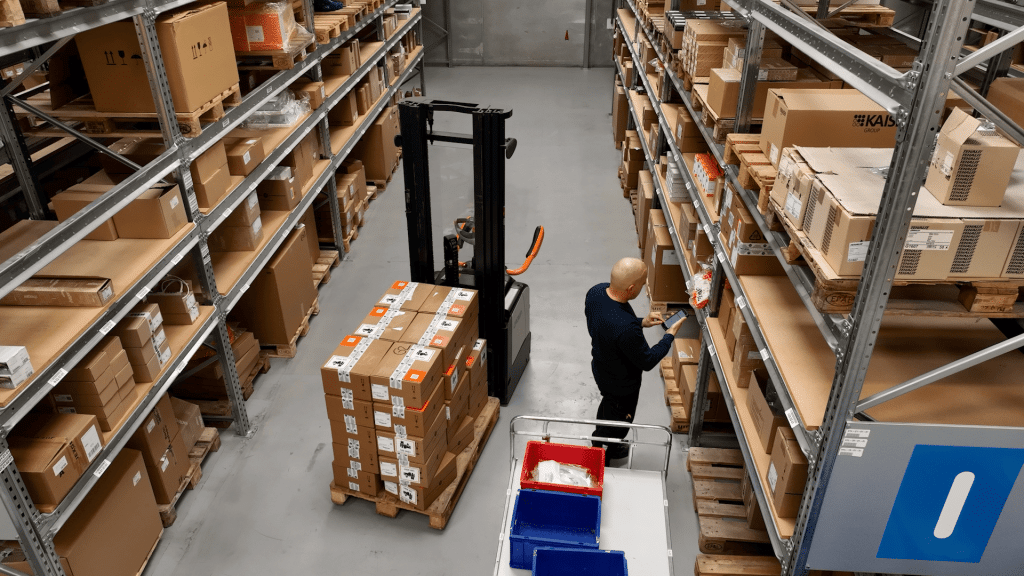
Implementing WMS Systems in Complex Warehouse Environments
For warehouses with many flows and special handling needs, having a flexible WMS system is crucial. This system must be adaptable to various workflows and handle exceptions in day-to-day operations. For instance, Norli Distribusjon AS has chosen Apport Systems to optimize their warehouse management using a customized WMS system.
Challenges in the Food and FMCG Industry
When it comes to food and fast-moving consumer goods, there is an extra layer of complexity. These products often require special storage and handling, making an advanced WMS system indispensable. 3 scenarios illustrate where a dedicated WMS is unavoidable to ensure efficient and accurate warehouse management.
Benefits of an Advanced WMS System
Investing in a WMS system brings a range of benefits. Firstly, warehouse efficiency and accuracy are improved, leading to better customer satisfaction. Additionally, the system helps reduce errors and minimize waste by optimizing inventory management.
Furthermore, warehouse managers can better plan and predict inventory needs, leading to more strategic decision-making and resource allocation. The impact of these improvements can be seen on the bottom line, where costs are reduced, and revenue is increased.
The Future of WMS Systems
With technological advancements like artificial intelligence and IoT (Internet of Things), WMS systems are constantly evolving. These technologies enable even more precise and real-time data, which can further optimize warehouse management. Equipment booking from depot exemplifies how modern technologies can be integrated with WMS to create more efficient processes.
Integration with Other Systems
A modern WMS system should not operate in isolation but integrate seamlessly with other IT systems within the company. This includes ERP systems (Enterprise Resource Planning) and CRM systems (Customer Relationship Management). By creating a holistic IT structure, companies can ensure that all departments work with the same data, reducing the risk of errors and improving decision-making.
Integrations also allow for the automation of many processes, saving time and reducing the need for manual intervention. This is particularly important in larger companies, where the complexity of operations can be significant.
Training and Education
Implementing a WMS system requires that employees receive the necessary training and education. To fully benefit from the system, it is important that all employees understand how it works and how it can be used to improve their daily tasks. Many companies invest in comprehensive training programs and workshops.
Good education ensures not only that the system is used correctly but also that employees feel comfortable with the changes new technologies bring. This can lead to greater employee satisfaction and a culture that embraces innovation.