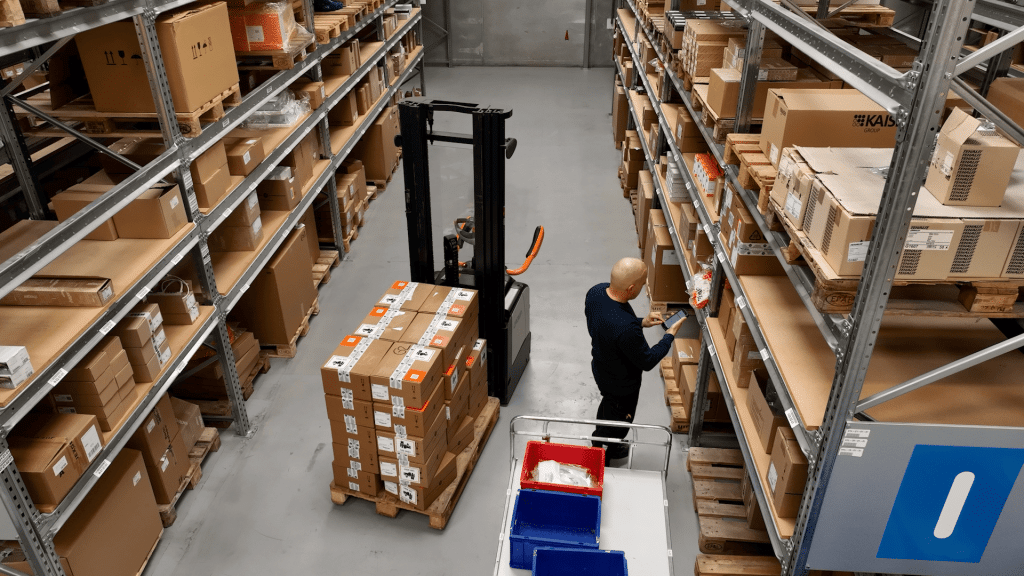
When is manual warehouse management no longer enough?
Is manual warehouse management still effective? See when it makes sense to move from manual processes to more digital warehouse management. As the warehouse grows, so do the demands for visibility, accuracy and efficiency. In this article, we look at why manual processes can become a limitation and which signs indicate that your warehouse is ready for a more digital solution.
Did you know..
WMS automates warehouse tasks.
WMS improves inventory accuracy.
WMS integrates with ERP systems.
How Can Inventory Management Software Help with Scaling?
Inventory management software, such as Warehouse Management Systems (WMS), can help companies scale their operations by automating and optimizing warehouse processes. This reduces errors, saves time, and increases customer satisfaction.
Automating Warehouse Processes
Automation is a critical factor for growth. By implementing a WMS, routine tasks such as picking, packing, and shipping can be automated, freeing up employees' time for more value-added tasks. Learn more about the requirements for a scalable warehouse system here.
Improving Warehouse Accuracy
Accuracy in inventory management is essential to avoid errors and maintain a high level of service. WMS provides real-time data and tracking, which helps minimize errors and improve warehouse accuracy. This is especially important as orders and items increase in volume and complexity.
Did you know..
WMS enhances customer service.
WMS reduces labor costs.
WMS adapts to market changes.
Integration with Other Systems
An effective WMS integrates seamlessly with other systems such as ERP and e-commerce platforms. This allows for data synchronization across company departments, improving oversight and decision-making. See how WMS can make a difference here.
Increased Flexibility and Scalability
WMS is designed to grow with your business. As there are more orders and items to handle, the system can be adapted to meet new demands without the need for a complete restructuring of warehouse processes.
Enhanced Customer Service
With more accurate and efficient inventory management, companies can enhance their customer service by ensuring faster and more accurate deliveries. This can be a competitive advantage in today's market, where customer expectations are high.
Cost Savings Through Automation
Implementing a WMS can also lead to significant cost savings. Automation reduces the need for manual labor, which can lower wage costs. Additionally, it can minimize the amount of errors and waste, leading to savings on inventory.
Better Working Environment
By automating time-consuming and physically demanding tasks, WMS can also improve the working environment for warehouse workers. It can reduce the risk of work-related injuries and stress, enhancing employee satisfaction and productivity.
Adapting to Changing Market Conditions
Another advantage of WMS is the ability to quickly adapt to changing market conditions. With real-time data, companies can quickly respond to changes in demand, adjust inventory levels, and optimize the supply chain to meet customer needs.
Environmental Benefits
Automated inventory management can also have positive environmental effects. With precise inventory control, waste can be reduced, and optimized shipping routes can lower CO2 emissions. This can help companies achieve their sustainability goals.
Conclusion
As we have seen, transitioning from manual inventory management to a WMS offers many advantages, including improved accuracy, reduced costs, better working conditions, and environmental benefits. By integrating and automating processes, companies can not only enhance their internal operations but also strengthen their market position. For more information on how to start this transition, read about the process from manual to WMS inventory management here.
FAQ
Why might manual inventory management become a bottleneck?
As companies grow, manual systems can hinder efficiency due to increased complexity and volume.
How does WMS help with scaling operations?
WMS automates and optimizes warehouse processes, reducing errors and saving time.
What tasks can WMS automate?
WMS can automate routine tasks such as picking, packing, and shipping.
How does WMS improve accuracy?
WMS provides real-time data and tracking to minimize errors.
Can WMS integrate with other systems?
Yes, WMS can seamlessly integrate with ERP and e-commerce platforms.
How does WMS enhance customer service?
By ensuring faster and more accurate deliveries, WMS improves customer satisfaction.
What cost savings does WMS offer?
WMS reduces manual labor needs and minimizes errors, lowering costs.
Har du brug for hjælp til at vurdere hvorvidt et lagerstyringssystem er det rigtige for din virksomhed? Du er altid velkommen til at kontakte mig, så vi sammen kan finde frem til den bedste løsning for din virksomhed.