
Warehouse solutions for changing order flows
Last updated
03/11/2026

Carsten
COO, Apport Systems
Optimization and implementation of WMS in complex order flows
How can you efficiently handle changing order flows? What are the best warehouse solutions for complex warehouses? How can WMS help achieve better insight and fewer picking errors? In this article, we delve into how warehouse solutions can optimize your warehouse management, especially when it comes to changing order flows, special handling, and daily exceptions.
Understanding complex order flows
In modern distribution companies, particularly within food/FMCG and retail, it is crucial to have flexible warehouse management. Changing order flows require systems that can adapt quickly and without errors. This is where a strong Warehouse Management System (WMS) comes into play. WMS can provide a comprehensive overview of inventory and optimize picking processes, allowing even the most complex order flows to be handled efficiently.
To optimize complex order flows, it is important to understand the specific challenges in your industry. For example, a retail company may experience sudden fluctuations in order volume due to seasonal promotions, while a manufacturer might face challenges managing large quantities of different components. In both cases, a WMS can create better visibility and control over inventory, making it easier to quickly adjust processes and resources. By utilizing data analytics, companies can predict trends and adapt to demand, reducing the risk of inventory challenges and improving customer service levels.
Read more about how a WMS can provide better insight and fewer picking errors in your warehouse management with Read more about optimizing inventory management with a modern WMS.
Implementing a WMS in a complex warehouse can be challenging, but it is a necessary evolution to handle complex order flows effectively. By integrating WMS, companies can achieve streamlined warehouse management, where processes such as picking, packing, and shipping are optimized. However, implementation requires careful planning, including an assessment of current processes and identification of potential improvement areas. Additionally, it is important to ensure that employees are properly trained to use the new systems so the transition is smooth.
Implementing WMS in a dynamic warehouse environment
Implementing a WMS in a dynamic warehouse environment requires a thorough understanding of existing processes and potential improvements. First and foremost, it is essential to evaluate which parts of the warehouse can be automated or optimized. This can include everything from picking to packaging and shipping. With proper implementation, WMS can ensure the warehouse keeps up with increasing demands and changing customer orders.
If you want to enhance warehouse efficiency, a WMS might be the right solution. Read more about WMS improving warehouse management and efficiency.
To ensure efficiency in WMS implementation, it is important to understand the specific needs and requirements the warehouse faces. This can include adapting to seasonal fluctuations, where a WMS can help predict and adapt to changes in demand. By analyzing past data, warehouses can prepare for increases or decreases in demand, ensuring the right products are available when needed.
Adapting to seasonal fluctuations and special handling
Seasonal fluctuations can be a challenge for many warehouses. A good WMS can help anticipate and adapt to these fluctuations by analyzing data from previous years. This means warehouses can prepare for demand surges and ensure all goods are available when they are most needed.
Adapting to dynamic warehouse needs is not just about handling seasonal fluctuations. It also requires an understanding of the market and the ability to quickly respond to changes in customer behavior. For example, a sudden shift in consumer preferences may require a rapid adjustment in inventory. An effective WMS can help predict these changes by analyzing purchase data and identifying patterns. Companies can thus ensure they have the right products in stock when demand rises and avoid overstocked warehouses when demand falls.
One of the biggest challenges for complex warehouses is managing special handling and exceptions. This can include anything from temperature-sensitive products to fragile items requiring special packaging. A WMS can help manage these requirements by automating processes and ensuring all procedures are followed correctly.
For growing companies, it is essential to have a warehouse that can keep up with development. Read more about WMS tailored for growth companies.
Successful adaptation to dynamic warehouse needs also requires the ability to manage special handling and exceptions. This includes handling products that require special attention, such as temperature-sensitive or fragile items. By utilizing a WMS, processes can be automated, ensuring all necessary requirements are met without errors. Automating such processes can also free up resources for more strategic tasks, further optimizing warehouse management.
Did you know
- WMS improves inventory visibility.
- WMS reduces picking errors.
- Automation frees up resources.
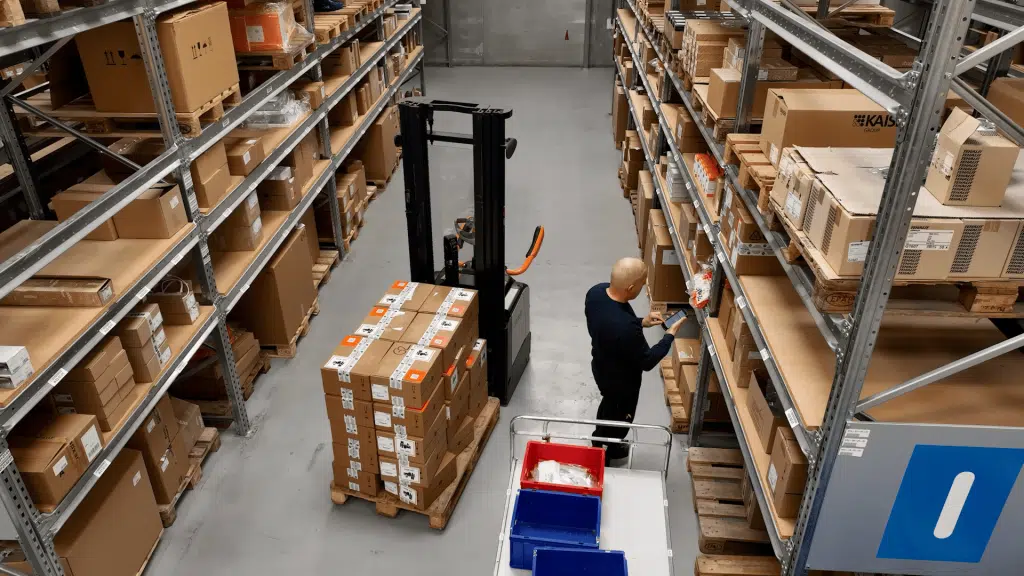
Adapting warehouses to dynamic needs and automation
Automating warehouse processes can provide a significant advantage, especially when handling special items. By implementing automated solutions, errors can be reduced, and all products can be correctly managed. Automation can also free up resources to focus on more value-creating tasks.
Automation in warehouse management brings a range of benefits beyond just reducing manual errors. It can also increase efficiency by freeing employees for more strategic tasks that can create value for the company. For example, automated picking and packing systems can reduce the time it takes to prepare orders, resulting in faster delivery times and higher customer satisfaction. Furthermore, automation can help maintain a high standard of quality and safety, especially when handling special items requiring specific storage conditions.
The transition from a manual warehouse to a WMS may seem like a significant task, but with the right planning, it can be done smoothly. First, current processes must be analyzed to identify areas that can be improved with automation. Then, an implementation plan must be developed, taking into account staff training and integration with existing systems.
Are you ready to take the leap to WMS warehouse management? Read more about starting with WMS warehouse management.
WMS solutions offer many benefits, including improved inventory, reduced picking error rates, and better customer satisfaction. By using WMS, companies can achieve more efficient and error-free warehouse management that can adapt to different market demands.
The transition from manual to automated warehouse management can be a challenging but necessary process for many companies. To ensure a smooth transition, it is important to start with a thorough analysis of current warehouse operations to identify areas that can benefit from automation. This can include everything from inventory counting to shipping logistics. A well-structured implementation plan should include staff training so they are familiar with the new systems, as well as a clear communication strategy to ensure all stakeholders are aware of the changes and their benefits. By taking these steps, companies can minimize disruptions in operations and quickly reap the benefits of more modern warehouse management.
Did you know
- Data analytics predict demand.
- Special handling needs WMS automation.
- Seasonal fluctuations require inventory prediction.

Conclusion and future perspectives
To efficiently handle changing order flows, it is essential to implement a flexible and reliable warehouse solution. A WMS can offer the necessary flexibility and security, allowing warehouses to adapt to changing demands and ensure smooth operations. By focusing on automation, handling special items, and transitioning to modern warehouse management, companies can achieve significant improvements in their warehouse operations and customer satisfaction.
FAQ
How does a WMS handle complex order flows?
A WMS provides an overview of inventory and optimizes picking processes, enabling efficient handling of complex order flows.
What is one major challenge for complex warehouses?
One major challenge is managing special handling and exceptions, which require specific procedures.
How can companies predict demand?
Companies can use data analytics to predict trends and adapt to demand, reducing the risk of inventory challenges.
What is required for implementing a WMS?
Implementation requires careful planning, assessment of current processes, and training employees in the new systems.
How can automation of warehouse processes be beneficial?
Automation can reduce errors and free up resources for more value-creating tasks, enhancing efficiency.
How can warehouses adapt to seasonal fluctuations?
A good WMS can anticipate and adapt to seasonal fluctuations by analyzing data from previous years.
Why is flexible warehouse management important?
Flexible warehouse management is important to quickly and accurately adapt to changing order flows.
How can a WMS improve customer satisfaction?
By ensuring faster delivery times and maintaining higher standards of quality and safety through automation.
What is necessary for a smooth transition to WMS?
A thorough analysis of current warehouse operations and a well-structured implementation plan are necessary.
How are special items handled effectively?
Special items are handled effectively by using a WMS to automate processes and ensure correct procedures are followed.
Del indlæg:

Christian Mikkelsen
CCO, Apport Systems
Do you need help assessing whether a warehouse management system is right for your business? You are always welcome to contact me so that together we can find the best solution for your business.