

Order system for growth requires control over inventory
Last updated
26/10/2026

Christian
CCO, Apport Systems
How do you choose an order management system that can keep up with your company’s growth?
An efficient order management system is essential for growing businesses. It improves inventory management, reduces errors, and provides a clear overview of warehouse operations. As your business grows, so do the demands on order processing and inventory management. More orders, a wider product range, and increasingly complex warehouse processes can make it difficult to maintain visibility and ensure efficient operations.
But how can you ensure that your order management system supports your company’s continued growth? And why is effective inventory management so important as order volumes and warehouse demands increase?
A reliable and scalable order management system is an important part of the solution. It must not only meet your company’s current needs but also be flexible enough to adapt as your business develops. By connecting order management, ERP, and warehouse management, you can reduce manual tasks, minimize errors, and ensure efficient warehouse operations.
In this article, we explore why a scalable order management system is important for growing businesses, the challenges that can arise with existing systems, and what you should consider when choosing a solution that supports your company’s future needs.
Did you know
- Scalable order system supports growth.
- Integration reduces manual errors.
- Automation saves time in inventory.
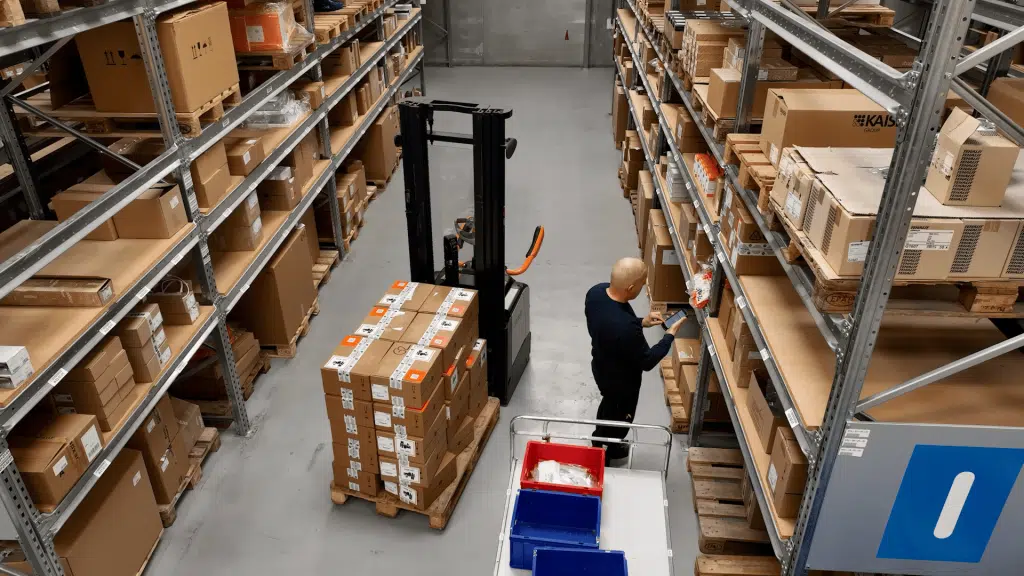
Effective inventory management and technological integration
Inventory management is a central part of an order system that must be able to grow with the company. Effective inventory management ensures there is always an overview of stock levels, which is crucial for meeting customer expectations for delivery times. It can also help reduce costs by optimizing storage space and minimizing excess inventory.
Effective inventory management can also enhance the company’s competitiveness by improving service levels. This is especially important for e-commerce businesses, where fast delivery is often a competitive parameter. Read more about how WMS enhances the efficiency of inventory management.
For example, a company involved in fashion can benefit from effective inventory management by ensuring that the right products are always available in the correct sizes and colors. This reduces the risk of sold-out items, which could otherwise lead to lost sales and dissatisfied customers. Well-organized inventory management can also help identify slow-selling items, allowing decisions on discounts or promotions to reduce excess stock.
Effective inventory management is not just about having the right products on the shelves but also about using technology to optimize warehouse performance. With advanced analytics, companies can predict demand and adjust inventory levels accordingly. This can reduce waste and increase turnover rates. Moreover, technologies like RFID and automated warehouse robots can improve the accuracy of inventory management and reduce the time spent on manual counting.
For e-commerce businesses, integrating the order system with inventory management is often a critical factor for success. Good integration can ensure smooth order processing and minimize the risk of errors. It can also enhance the customer experience by allowing them to track their order status in real time.
By integrating WMS with e-commerce platforms like WooCommerce, companies can achieve more streamlined operations and better utilization of their resources. It also allows for scaling operations without making significant changes to the IT infrastructure. Read more about inventory management for WooCommerce.
A good integration between a WMS and an e-commerce platform can also significantly improve the customer experience. For instance, customers can receive updated stock information directly on product pages, reducing the risk of purchasing out-of-stock items. Additionally, faster order processing and accurate delivery updates can increase customer satisfaction and loyalty, which is essential for maintaining a competitive position in the market.
Integrating technologies into order systems can also provide real-time data that helps management make informed decisions. For example, data from IoT devices can provide insights into the condition and movement of inventory, which can improve the efficiency of inventory management. Solid technology integration also ensures that the company can quickly respond to market trends and changes in customer preferences, which is crucial for maintaining competitiveness in a rapidly changing e-commerce world.
Adapting order systems for growth companies
For growth companies, having an order system that can adapt to changing needs is crucial. The right system can help manage increased complexity and ensure that the company can continue to deliver high quality to customers. A flexible order system can also help reduce operational costs and improve the company’s bottom line.
A strategic approach to choosing an order system can also prepare the company for future growth opportunities. By selecting a system designed to grow with the company, costly and time-consuming system changes can be avoided in the long run. Read more about how to create a warehouse that can keep up with growth.
Growth companies can also benefit from a strategic approach by investing in order systems that offer flexibility and customization options. For instance, a company planning to expand into new markets can choose an order system that supports multiple currencies and languages, preventing potential barriers for international expansion. Such systems can also integrate with different regional logistics partners, ensuring a seamless transition to new markets.
When a growth company considers adapting order systems, it is important to focus on future-proofing. A flexible system allows for easy scaling of operations and integration with new technologies and markets. For example, a scalable system can support the company’s expansion by allowing the addition of new product lines or expansion into international markets without the need for a complete overhaul of existing processes. This can save time and resources while promoting a smoother growth strategy.
Did you know
- Advanced technology optimizes inventory.
- Real-time data aids decision-making.
- Flexible systems support international expansion.

Benefits of upgrading the order system
Upgrading the order system can have many benefits, including improved inventory management, better customer service, and reduced costs. It can also provide the company with better data insights, which can be used to make informed strategic decisions.
An additional benefit of upgrading the order system is the ability to quickly adapt to changes in the market. For example, a company that upgrades its system can more easily implement new distribution channels or respond to changing customer needs with adjusted product offerings. This can strengthen the company’s ability to remain relevant and competitive in a rapidly changing industry.
Companies that have upgraded their order systems often report increased productivity and better customer satisfaction. This is because a modern order system can automate many manual processes that previously took time and resources. It frees employees to focus on more value-adding activities.
A concrete example of the benefits of upgrading an order system can be seen in a company that previously struggled with long delivery times and many returns due to errors in order processing. After upgrading to a modern system, order processing time was halved, and the number of errors was significantly reduced. This resulted in improved customer satisfaction and reduced operating costs, giving the company a stronger market position and increasing its profit margin.
By upgrading the order system, companies can not only improve their internal processes but also achieve a better position in the market. Modern order systems often offer features such as automated reports and dashboards that provide management with deeper insights into the company’s performance. This can help identify areas for improvement and launch strategic initiatives to increase efficiency. Besides improving operational processes, upgrading the system can also enhance the company’s reputation as an innovative and forward-thinking player in the industry.
Final considerations and future strategies
An effective order system is a critical component for growing companies. It ensures that inventory management can keep up with the company’s needs and provides a better overview of the business. By choosing a scalable and flexible system, companies can position themselves for future growth and competitive advantages. Consider upgrading your order system to ensure your company remains competitive and efficient.
In addition to functional improvements, upgrading the order system can also have positive cultural effects on a company. Employees may experience greater job satisfaction when they no longer have to handle inefficient, manual processes. This can lead to a more engaged and productive workforce. In the long run, this can also attract talented individuals to the organization who value modern and efficient work environments.
In conclusion, it can be said that an effective order system is key to success for growing companies. By choosing a system that can integrate with existing technologies and adapt to future needs, companies can position themselves for sustained success. It is crucial to consider both current and future needs to ensure that the order system can support the company’s long-term goals. Investing in a flexible and scalable order system can be a catalyst for growth and competitive advantages in a dynamic market.
Another important consideration for future strategies is the incorporation of sustainability in order systems. Companies can optimize their supply chains to reduce environmental impact, for example, by minimizing transportation costs or using green technology in their inventory management processes. This can not only improve the company’s reputation among environmentally conscious customers but also lead to cost savings in the long term. The integration of sustainable practices in order systems can thus serve as a differentiating factor in a competitive market where more and more customers expect companies to take responsibility for their environmental impact.
FAQ
Why is a scalable order system important for growth?
A scalable order system is important for growth because it can handle increased order complexity without compromising efficiency.
How can integration reduce errors?
Integration can reduce errors by automating processes and providing better oversight of inventory management.
What role does automation play in inventory management?
Automation in inventory management saves time and reduces human errors, contributing to more efficient operations.
How does advanced technology improve inventory management?
Advanced technology like analytics predicts demand and optimizes inventory levels, reducing waste.
What are the benefits of real-time data in order systems?
Real-time data helps management make informed decisions and improves the efficiency of inventory management.
How can flexible systems support international expansion?
Flexible systems support international expansion by allowing integration with different currencies and languages.
What impact does technology integration have on customer satisfaction?
Technology integration improves customer satisfaction by ensuring smooth order processing and accurate delivery updates.
How can companies benefit from upgraded order systems?
Upgraded order systems improve inventory management, customer service, and reduce operational costs, strengthening the company's market position.
What is a strategic advantage of upgrading an order system?
A strategic advantage of upgrading an order system is the ability to quickly adapt to market changes and increase competitiveness.
How do effective order systems affect employee satisfaction?
Effective order systems can increase employee satisfaction by reducing the need for manual processes and enhancing job satisfaction.
Del indlæg:

Christian Mikkelsen
CCO, Apport Systems
Do you need help assessing whether a warehouse management system is right for your business? You are always welcome to contact me so that together we can find the best solution for your business.
Have you read

Episode 3: Labeling Your Warehouse. Learn How.
In concrete terms, process optimization is about identifying waste or opportunities in the warehouse processes, and, most importantly, finding solutions that can be