
Packaging Data in a Sustainable Supply Chain
Packaging Data in a Sustainable Supply Chain


COO, Apport Systems
How do you choose the right order system for B2B orders with special requirements? What should be considered in complex warehouse flows? How can optimal handling of special handling and exceptions be ensured? In this article, we delve into order systems for B2B orders designed to manage complex warehouses with many flows, special handling, and daily exceptions.
When companies manage B2B orders with specific requirements, choosing the right order system becomes a crucial factor in their operational efficiency. A good order system should not only handle daily business functions but also adapt to unique customer needs, integrate with warehouse management systems, and ensure that all processes run smoothly. This article explores the key aspects of order systems designed to meet complex warehouse flows and special handling, offering insights on how to best choose a system that suits the company’s specific needs.
For many production and distribution companies, an order system is not just a software solution; it is a critical component of daily operations. An effective order system can be the difference between success and failure, especially when dealing with B2B orders with special requirements. In this article, we look at what you need to be aware of when choosing an order system and how it can optimize your workflows.
Effective order management is crucial in today’s business environment, especially for B2B companies that often face complex requirements and special orders. With the right technology, companies can improve their operational efficiency, reduce errors, and meet customer expectations. An order system that can integrate seamlessly with other systems, such as warehouse management and ERP, is essential. This not only ensures efficient operations but also that customers’ unique requirements are met without compromising quality. By choosing the right order system, companies can navigate the challenges that come with complex and specialized B2B orders.
The first step in choosing the right order system is understanding what the system needs to do. For B2B orders with special requirements, it is important that the system can handle a variety of processes, from order entry to delivery. This means the order system must integrate with existing warehouse management systems and be adaptable to the specific requirements your company has.
An effective order system is essential to ensure that B2B transactions run smoothly. It must be able to handle large amounts of data and orders simultaneously, which requires robust software and hardware. The system should allow for real-time updates, which can be critical in a rapidly changing warehouse and delivery context. A hypothetical example could be a pharmaceutical company that needs fast handling of orders with short delivery times due to the short shelf life of medications. Here, an effective order system can ensure that products arrive on time and in the desired quality.
One of the most important features of an order system is its ability to integrate with existing warehouse management systems (WMS). An effective integration can help automate processes and reduce error margins. For example, a well-integrated order system can automatically update stock levels and send real-time updates to warehouse staff, ensuring that orders are handled efficiently. Read more about Apport WMS.
An order system must be adaptable to the specific needs your company has. This includes the ability to handle special handling of goods that require special storage or transportation. The system must also be able to handle exceptions, such as orders that require fast delivery or special customer requirements. Read more about optimizing warehouse systems with Apport WMS.
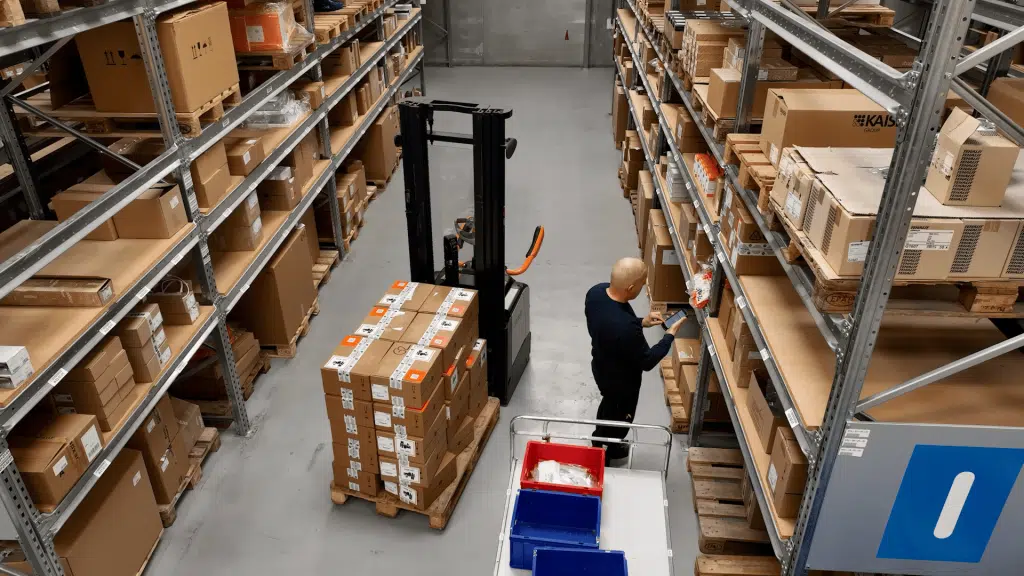
For companies with complex warehouse flows, it is crucial that the order system can effectively handle these processes. This includes managing warehouse space, pick and pack processes, and shipping. An effective order system can automate many of these processes, reducing the workload for warehouse staff and minimizing the risk of errors.
To optimize warehouse processes, it is crucial that order systems can handle complex logistical challenges. This includes being able to predict stock needs based on past order data and seasonal fluctuations. For example, a food wholesaler can use historical sales data to predict high demand during holiday seasons and thus optimize inventory to avoid out-of-stock situations. Furthermore, the system should be able to adjust warehouse space in real-time, adapting to changes in product range or customer order habits.
Optimal utilization of warehouse space is an important factor for many businesses. An order system should be able to help optimize this space by suggesting where goods should be placed and how they can be best stored. This can be especially useful for companies that handle many small orders, where goods need to be quickly found and shipped. Read more about warehouse management with small orders.
Automation of pick and pack processes can save time and reduce errors. An order system that can automate these processes allows warehouse staff to focus on more complex tasks. The system can, for example, generate pick lists that optimize picking routes and minimize the time it takes to find and pack goods.
B2B orders can often have special requirements that require extra attention. This can include everything from special packaging requirements to quick delivery. An order system must be able to handle these requirements effectively and ensure that the necessary resources are available to meet the customer’s needs.
Some customers may have specific requirements for how their orders should be packaged or delivered. An order system should be able to record these requirements and ensure that they are complied with. This can include everything from choosing packaging materials to selecting a carrier. The system must also be able to handle last-minute changes without disrupting daily operations.
Exceptions are an unavoidable part of order processing, especially when it comes to special requirements. An order system must have the flexibility to handle these exceptions effectively. This can include everything from handling backorders to adjusting delivery dates or locations. Read more about ERP and WMS for partial and backorders.
Handling exceptions is a critical part of order systems, and a well-developed strategy can be the difference between success and failure. An order system that can handle these exceptions must be flexible and adaptable so companies can respond quickly to changes. For example, if a customer wants to change a delivery address after dispatch, the system must be able to update logistics without delaying delivery. This not only requires sophisticated technology but also a deep understanding of customer needs and expectations. By focusing on exceptions, companies can improve their service and strengthen their competitiveness.
Managing special requirements and exceptions often requires a high degree of flexibility and adaptability in the order system. For example, an electronics distributor may face a backorder that requires quick updates of delivery dates, or a customer may change the delivery address at the last minute. A robust order system will be able to handle these changes without disrupting normal operations while ensuring that all involved parties are informed effectively. The system should also be able to record and analyze data from these exceptions to improve future processes.

Choosing the right order system for B2B orders with special requirements is a complex task but crucial for your company’s success. The right system can help streamline warehouse flows, handle special requirements and exceptions, and integrate with existing systems. By choosing an order system that is tailored to your company’s specific needs, you can ensure that your B2B orders are handled efficiently and accurately. Carefully consider which features are most important for your business and how they can be implemented to optimize your daily processes.
One of the most exciting aspects of future order systems is the implementation of blockchain technology. Blockchain can ensure a high degree of transparency and security in transactions, which can be crucial for companies handling sensitive information or relying on reliable supply chains. By using blockchain, all transactions can be traced back to their origin, reducing the risk of fraud and errors. This can be particularly useful in sectors such as food and pharmaceuticals, where traceability is critical. Furthermore, smart contracts based on blockchain can automate payment processes and ensure that payments are only released when certain conditions are met, further streamlining financial transactions.
Another important technology expected to integrate with future order systems is augmented reality (AR). With AR, warehouse staff can access visual guides through smart glasses or mobile devices that can assist with pick and pack processes. For example, an AR application can show the precise location of goods in the warehouse, reducing the time it takes to find and pack orders. This technology can also be used to train new staff, reducing startup time and improving accuracy in order processing. By applying AR, companies can significantly improve their efficiency and accuracy in warehouse management, ultimately leading to better customer satisfaction.
Future order systems will be heavily influenced by technological advancements such as artificial intelligence (AI) and machine learning. These technologies can offer improved forecasts and automatically adjust systems to changing conditions in real-time. For example, AI can be used to predict stock needs more accurately or adjust delivery routes based on traffic data to optimize delivery times. Additionally, integration with Internet of Things (IoT) devices will provide an even greater degree of monitoring and control over inventory and logistics processes. With these technologies, companies can achieve unprecedented efficiency and flexibility in their order systems.
Del indlæg:

CCO, Apport Systems