Logistics Trends 2026: How AI and Automation Will Shape the Future Supply Chain
30/10/2025
Forfatter
Christian Mikkelsen, CCO
The world of logistics is moving faster than ever. New markets are opening, customer expectations are rising, and supply chain demands are increasing accordingly. For companies working with import and export, competitiveness is no longer just about price and delivery time – it’s about building a supply chain that can think for itself.
That’s why technologies such as artificial intelligence and automation are now high on the agenda. Not as promises of a distant future, but as tools that are already changing the way we plan, monitor, and manage logistics. Companies that strategically embrace these technologies achieve greater accuracy, faster response times, and a more data-driven foundation for decision-making. The result is more stable operations and an easier path to navigating a world where speed and quality are key.
From Reactive to Proactive Planning
One of logistics’ biggest challenges has always been unpredictability. Weather conditions, traffic issues, port bottlenecks, and shifts in demand can derail even the best plans. Here, AI-driven predictive analysis can make a real difference.
By analyzing large amounts of data – from historical deliveries to current weather patterns and capacity utilization – AI systems can predict where problems are likely to arise before they occur. This enables smarter planning, optimized routes, and more flexible resource allocation, making the entire supply chain more resilient.
The outcome? More precise deliveries, fewer operational disruptions, and stronger customer trust.
Automation in the Warehouse
The warehouse plays a crucial role in every supply chain – and it’s here the effects of automation are most visible. Robots, automated transport systems, and advanced warehouse solutions can pick, pack, and move goods with high precision and without breaks. This leads to faster order processing, fewer errors, and a smoother overall flow.
But automation isn’t just about speed. It’s about stability and quality. When routine tasks are automated, employees gain more time for optimization, planning, and improvement. The result is a warehouse that’s both more efficient and more adaptable. For many companies, the biggest benefit isn’t faster delivery – it’s greater predictability in everyday operations.
Document Handling Without Bottlenecks
Waybills, invoices, customs papers, and packing lists must all be checked, registered, and sent at the right time.
AI-based document handling can significantly reduce the pressure. These systems automatically read and interpret documents, extract relevant data, and verify accuracy. This minimizes the risk of errors and customs delays – while freeing employees from tedious manual entry.
The result is saved time, improved quality, and smoother collaboration across borders.
A New Way of Thinking About Logistics
AI and automation aren’t about replacing people – they’re about empowering them. The technology provides better decision-making tools, more stable processes, and greater transparency across the value chain.
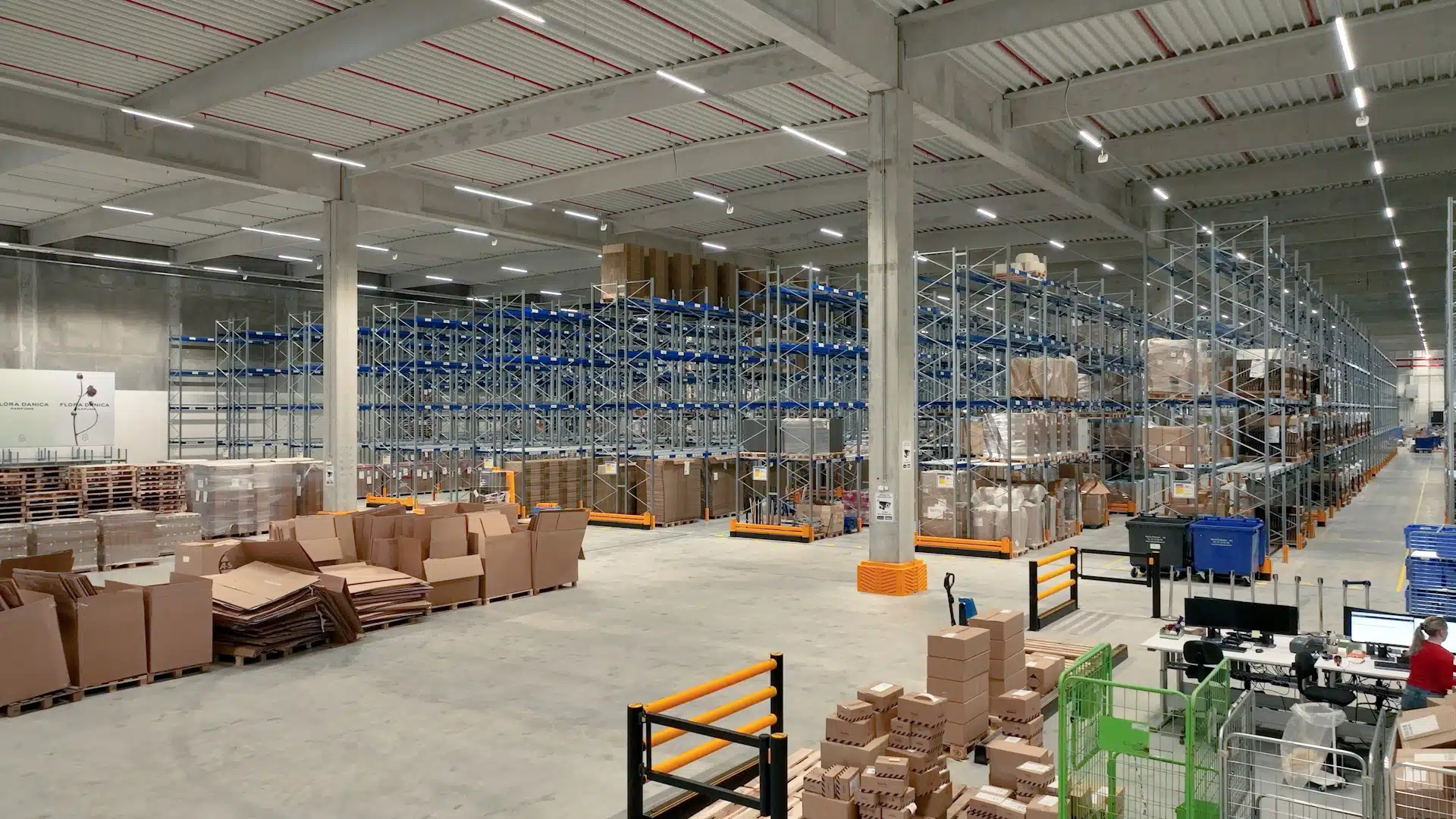
At Apport Systems, we’re seeing how the interplay between people and technology is already improving warehouse flow for many companies. A clear example is Schou, which as part of its strategic growth plan has invested in a fully automated high-bay warehouse with space for 40,000 pallets. Here, all in- and outbound movements are automated, and the system continuously optimizes the placement of each pallet for maximum efficiency. The result is a more stable flow, fewer errors, and a warehouse operation ready for the demands of the future.
When people and technology work together, logistics doesn’t just react – it anticipates. And the companies investing in this development gain not only a technological advantage, but a more efficient, stable, and future-ready operation.
customer case
Schou has chosen to invest in a fully automated high-bay warehouse as part of its strategic growth plan
Want to learn more about automated warehouse management?
Need help assessing whether a warehouse management system or which automation solutions are right for your business? You’re always welcome to contact us so we can find the best solution together.