
Logistics Management with Fewer Urgent Tasks
21/09/2026

Carsten
COO, Apport Systems
How can you reduce urgent tasks in the warehouse?
Reduce urgent warehouse tasks. See how logistics management and WMS can improve visibility and make processes more efficient. For warehouses looking to streamline daily operations, strategic logistics management can help reduce inefficiencies and improve visibility. By implementing effective Apport WMS solutions, companies can enhance their warehouse management and reduce the number of urgent tasks.
Understanding the Need for Effective Logistics Management
Logistics management is a crucial part of any company’s operations, especially within the food/FMCG sector, distribution companies, and manufacturing enterprises. Established warehouses often face the challenge of handling sudden urgent tasks, which can distract from more strategic goals. By understanding the role of logistics management, companies can effectively plan and manage their resources.
The Importance of a Modern WMS
A modern Warehouse Management System (WMS) is essential for achieving effective logistics management. It helps automate processes, reducing errors and freeing up time for more valuable tasks. Learn more about Apport WMS solutions to gain insight into how it can assist your warehouse.
Identify Core Areas for Improvement
To reduce urgent tasks, one must first identify core areas where inefficiency arises. This can include processes such as inventory counting, order picking, and goods receipt. By analyzing these areas, you can implement improvement strategies. For more detailed information, you can visit our article on warehouse management in growth companies.
- Apport WMS reducerer akutte opgaver.
- Moderne WMS automatiserer lagerprocesser.
- Teknologi minimerer menneskelige fejl.
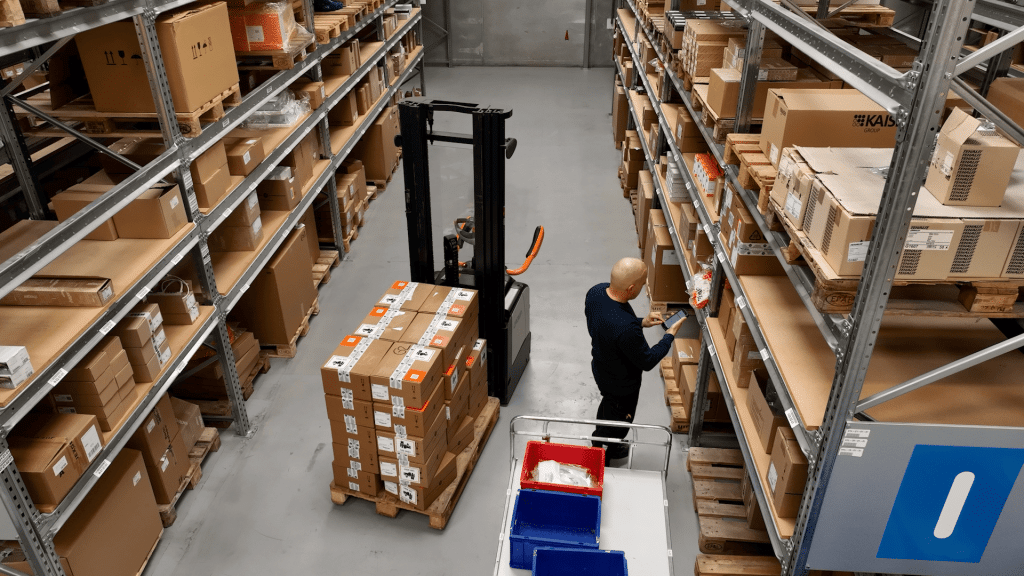
Implementing Process Optimization
Process optimization involves streamlining existing work processes to increase efficiency. This can be achieved through the use of technology, staff training, and standardizing procedures. Implementation requires careful planning and follow-up.
Using Technology for Efficiency
Technology plays a central role in optimizing logistics processes. Automating repetitive tasks can drastically reduce time consumption and minimize human errors. Read about how you can optimize inventory management with modern WMS in our article on inventory management optimization.
Training and Educating Employees
For an optimization strategy to be successful, it is important that employees are well-trained in the new processes and technologies. Regular training ensures everyone is on the same page and understands their roles in the overall process.
Monitoring and Evaluating Logistics Processes
It is essential to monitor and evaluate logistics processes to ensure that implemented changes continue to add value. Use data analysis to identify areas that can still be improved and adjust strategies accordingly.
Integration with ERP Systems
An effective integration with ERP systems can provide a holistic overview of the entire supply chain. This allows for quick responses to changes and ensures that all processes function in sync. Read more about ERP and WMS integration.
Adapting to Market Changes
Market conditions can change rapidly, and it is important to adapt logistics strategies accordingly. Flexibility in processes ensures that the company can quickly respond to changes in demand.
Future Trends in Logistics Management
Technological advancements significantly impact logistics management. Future trends include the use of artificial intelligence and machine learning to predict inventory needs and optimize the supply chain. Drones and autonomous vehicles may also become part of logistics solutions, further reducing the need for human intervention in certain processes.
Artificial Intelligence in Logistics
Artificial Intelligence (AI) has the potential to revolutionize logistics management by offering more precise predictions and automated decision-making. AI can quickly analyze large amounts of data and identify patterns that can help optimize inventory management and reduce the need for urgent tasks.
Automation and Robotic Technology
Automation through robotic technology can enhance the efficiency and speed of logistics processes. Robots can be used for everything from order picking to packing and shipping, freeing up employees for more complex tasks and reducing errors.
- ERP-integration giver forsyningskædeoversigt.
- AI forudsiger lagerbehov præcist.
- Robotter optimerer ordreplukning.

Conclusion
Effective logistics management is about reducing unnecessary urgent tasks through strategic planning and technology. By focusing on core areas for improvement, implementing process optimization, and integrating modern systems, warehouses can achieve better oversight and efficient operations. By educating employees and adapting to market changes, logistics management becomes a strength rather than a challenge. Future technologies like AI and automation will continue to play a crucial role in shaping the logistics sector and creating more agile and responsive processes.
FAQ
Del indlæg:

Christian Mikkelsen
CCO, Apport Systems
Har du brug for hjælp til at vurdere hvorvidt et lagerstyringssystem er det rigtige for din virksomhed? Du er altid velkommen til at kontakte mig, så vi sammen kan finde frem til den bedste løsning for din virksomhed.
Har du læst disse blogindlæg?

Packaging Data in a Sustainable Supply Chain
Packaging Data in a Sustainable Supply Chain