
Is Your Logistics Management Ready for Growth?
20/09/2026

Christian
CCO, Apport Systems
How do you prepare warehouse management for growth?
Is your warehouse management ready for growth? See how WMS can help you scale operations and handle more orders efficiently. As order volumes increase, so do the demands on both processes and warehouse management. In this article, we look at how WMS can support growth and make it easier to scale warehouse operations without losing visibility or efficiency. Find more information on the topic on Apport’s page here.
The Importance of Scalable Logistics Management
Scalable logistics management is crucial for companies experiencing growth. It involves handling more orders and a broader product range without compromising efficiency. Robust logistics management ensures that your company can grow without encountering bottlenecks or inefficient processes, which can lead to dissatisfied customers and lost revenue.
How to Assess Your Current Logistics Management
To determine if your logistics management is ready for growth, you must first evaluate your current system. Consider the following six specific aspects:
- Order processing efficiency
- Warehouse management and inventory control
- Scalability of current systems
- Integration with existing IT systems
- Ability to adapt to market changes
- Customer experience and satisfaction
- WMS optimerer lagerprocesser.
- Automatisering reducerer logistiske fejl.
- Robotteknologi forbedrer lagerpræcision.
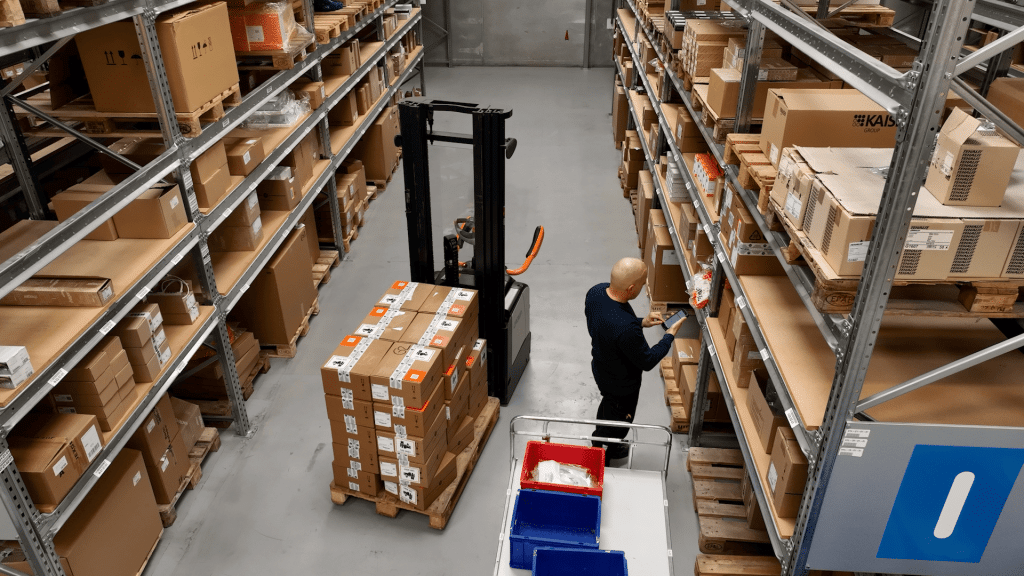
Benefits of Implementing a WMS
A Warehouse Management System (WMS) can be a game-changer for many businesses. It helps automate and optimize warehouse processes, making it easier to handle larger volumes of goods. Additionally, an advanced WMS can provide the necessary insights to make data-driven decisions that can significantly improve your warehouse management.
Integration and Flexibility
It's essential that your WMS can integrate with existing systems like ERP and e-commerce platforms. Flexibility in integration ensures that you can expand and adapt your systems as needed. Learn more about optimizing your warehouse systems with Apport WMS here.
Customer Experience and Satisfaction
Effective logistics management can greatly enhance customer experience. Fast and accurate deliveries boost satisfaction and can lead to repeat purchases. Therefore, it's crucial to ensure that your logistics processes can handle an increase in orders without compromising delivery speed or accuracy.
Transition from Manual Systems to WMS
If you are still using manual systems or spreadsheets for your warehouse management, transitioning to a WMS may be a necessary step for scaling. A WMS can provide the automation and efficiency required for growth. Read about the signs that your warehouse management is ready for the next step here.
The Role of Automation in Modern Logistics Management
Automation plays a crucial role in ensuring scalability and efficiency in logistics management. By implementing automated solutions such as robotics and AI-based systems, you can reduce errors and increase the speed of your processes. This leads to more streamlined operations that can handle larger volumes without significantly increasing costs.
Robotics in the Warehouse
By implementing robotics in the warehouse, you can enhance the precision and speed of your warehouse operations. Robots can perform repetitive tasks faster and more accurately than humans, freeing your staff to focus on more complex tasks requiring human insight and decision-making.
AI-Based Systems
The use of artificial intelligence in logistics management can help predict demand and optimize inventory. AI systems can analyze data to identify patterns and trends, allowing businesses to predict which products will be most in demand and adjust inventory accordingly.
- AI forudsiger efterspørgsel præcist.
- Grøn transport reducerer CO2-udledning.
- Optimal ruteplanlægning sparer brændstof.

Implementing Sustainable Solutions
Sustainability is becoming increasingly important in logistics management. To prepare for growth, consider implementing green solutions that reduce your environmental impact. This can include using energy-efficient vehicles, reducing packaging waste, and optimizing routes to minimize fuel consumption.
Green Transportation
By investing in electric or hybrid vehicles, you can significantly reduce your CO2 emissions. Green transportation is not only good for the environment but can also improve your company's reputation among environmentally conscious consumers.
Optimal Route Planning
By using advanced route planning tools, you can reduce fuel consumption and delivery times. These systems can calculate the most efficient routes based on traffic data, road conditions, and other variables, saving time and resources.
Conclusion
In summary, it is crucial that your logistics management is ready for growth if you want to seize new market opportunities effectively. Consider implementing a WMS that can integrate with your existing systems to ease the transition and ensure smooth operations. By focusing on efficiency, scalability, and customer satisfaction, you can position your company for success in a growing industry. Additionally, automation and sustainability should be central elements in your strategy to ensure future-proof logistics management.
FAQ
Del indlæg:

Christian Mikkelsen
CCO, Apport Systems
Har du brug for hjælp til at vurdere hvorvidt et lagerstyringssystem er det rigtige for din virksomhed? Du er altid velkommen til at kontakte mig, så vi sammen kan finde frem til den bedste løsning for din virksomhed.