
How to Anchor a WMS Solution in Daily Operations
Last updated
07/10/2026

Carsten
COO, Apport Systems
What is a WMS Solution, and Why is it Important?
Are you considering implementing a WMS solution in your warehouse? A WMS solution, or Warehouse Management System, is software that helps manage and optimize daily warehouse processes. It is essential for any business looking to improve its inventory management and increase efficiency.How to Start Implementing a WMS Solution?
First and foremost, you need to understand your current warehouse process. This involves a thorough analysis of daily operations and existing systems. It is important to map out where improvements are needed and how a WMS solution can be integrated with your current systems. Read more about how a WMS can enhance inventory management here.Integration with Existing Systems
A crucial factor for successful implementation is how the WMS solution can be integrated with your existing systems, such as ERP. This ensures that all data is synchronized seamlessly, reducing errors and improving decision-making. Read about ERP and WMS integration here.How to Choose the Right WMS Solution?
Choosing the right WMS solution depends on your company’s specific needs. It is important to consider scalability, user-friendliness, and vendor support. Carefully evaluate the features to ensure they meet your current and future requirements.Employee Training
To ensure a smooth transition to a WMS solution, it is critical that employees are thoroughly trained in using the system. This may involve workshops, on-the-job training, and ongoing support. Effective training helps reduce resistance to new systems.How to Measure the Success of a WMS Solution?
After implementation, it is important to follow up on how the WMS solution improves warehouse performance. This can be done by measuring key indicators such as inventory turnover, picking accuracy, and warehouse utilization. Assess whether there is a noticeable improvement in efficiency and accuracy.Preparing for Future Changes
Warehouse needs change over time, so it is important to choose a flexible WMS solution that can adapt to future requirements. Ensure that your solution is scalable and can handle increasing complexity and volume.Did you know..
- WMS optimerer lagerprocesser.
- ERP synkroniserer data med WMS.
- Vælg WMS efter skalérbarhed.
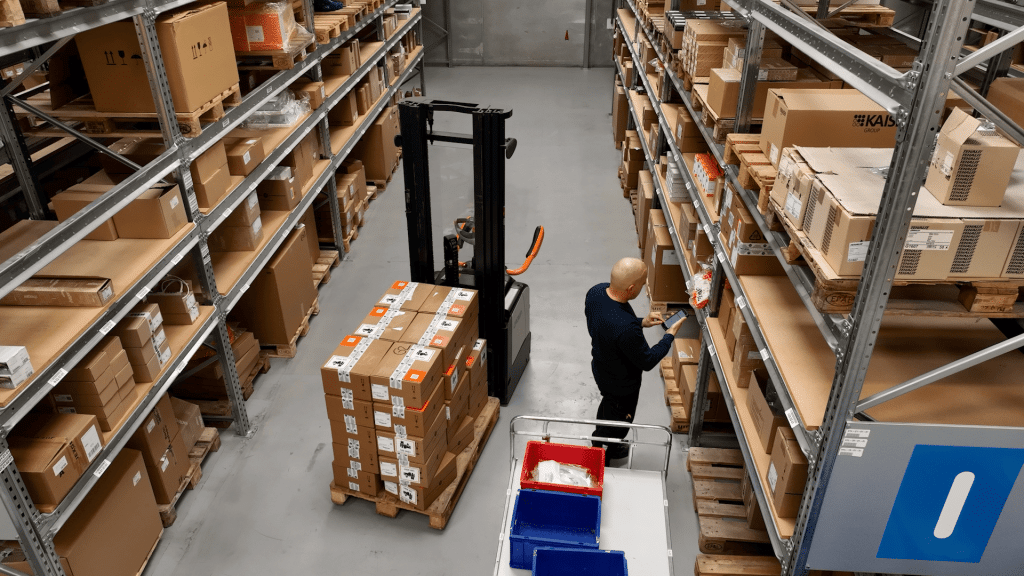
Anchoring WMS in Daily Operations
Daily Monitoring and Adjustment
Successful anchoring of a WMS solution requires ongoing monitoring and adjustment. It is important to have a team dedicated to monitoring system performance and making necessary adjustments. This ensures that the WMS solution always operates optimally and adapts to any changes in warehouse operations.
Feedback from Employees
Employee feedback is crucial for fine-tuning the system. Employees who use the WMS solution daily can provide valuable insights into where the system works well and where improvements are needed. Regular meetings and surveys can be an effective way to gather this feedback.
Continuous Training and Updates
Even after initial training, it is important to offer ongoing education, especially when system updates or new features are introduced. This helps keep employees up-to-date and ensures they use the system most effectively.
Automation and Efficiency
One of the greatest benefits of a WMS solution is the ability to automate many warehouse processes, such as order picking and inventory replenishment. By maximizing the use of automation, companies can reduce manual errors, increase speed, and improve overall efficiency.
Summary
Implementing a WMS solution is a strategic investment in the future of your business. By understanding and optimizing warehouse processes, training personnel, monitoring system performance, and continuously adjusting and updating the solution, companies can achieve significant improvements in efficiency and accuracy. With a well-implemented WMS solution, your business can not only meet today's challenges but also be well-prepared for future demands. For further insights into how a WMS can transform your inventory management, visit our page here.
Did you know..
- Feedback fra ansatte forbedrer WMS.
- Automatisering reducerer manuelle fejl.
- Løbende træning opretholder effektivitet.

FAQ
Hvad er en WMS-løsning?
En WMS-løsning er software, der hjælper med at administrere og optimere daglige lagerprocesser.
Hvorfor er integration med ERP vigtig?
Integration med ERP sikrer, at alle data synkroniseres problemfrit, hvilket reducerer fejl.
Hvordan vælger jeg den rette WMS?
Vælg en WMS, der er skalerbar, brugervenlig og har god leverandørstøtte.
Hvorfor er træning vigtig ved WMS?
Træning sikrer en glidende overgang og reducerer modstand mod nye systemer.
Hvordan måles succesen af en WMS?
Succesen måles ved at evaluere nøgleindikatorer som lageromsætning og plukkepræcision.
Hvorfor er feedback fra ansatte vigtigt?
Feedback fra ansatte er vigtig for at finjustere systemet og forbedre dets anvendelse.
Hvordan kan WMS forbedre effektiviteten?
WMS kan forbedre effektiviteten ved at automatisere processer og reducere manuelle fejl.
Hvad er en fordel ved automatisering i WMS?
Automatisering i WMS kan øge hastigheden og forbedre den samlede effektivitet.
Hvorfor er løbende opdateringer nødvendige i WMS?
Løbende opdateringer sikrer, at medarbejderne er opdaterede og bruger systemet effektivt.
Hvordan kan en virksomhed forberede sig på fremtidige ændringer med WMS?
En virksomhed kan forberede sig ved at vælge en fleksibel WMS-løsning, der kan tilpasses nye krav.
Del indlæg:

Christian Mikkelsen
CCO, Apport Systems
Har du brug for hjælp til at vurdere hvorvidt et lagerstyringssystem er det rigtige for din virksomhed? Du er altid velkommen til at kontakte mig, så vi sammen kan finde frem til den bedste løsning for din virksomhed.