ERP and WMS for partial orders and backorders
Last updated
17/10/2026

Carsten
COO, Apport Systems
How can ERP and WMS improve the handling of partial orders and backorders?
How can ERP and WMS optimize partial orders and backorders? What challenges do warehouses face with more orders? How can one ensure effective warehouse management when order volumes grow? For warehouse and logistics managers in growing companies, it is essential to understand how ERP and WMS can improve the handling of partial orders and backorders. By integrating these systems, companies can achieve better oversight and efficiency in their warehouse management.
ERP (Enterprise Resource Planning) and WMS (Warehouse Management System) are two crucial systems that can optimize warehouse management, especially in companies with growing order volumes. For warehouse and logistics managers, it is important to understand how these systems can be integrated to handle partial orders and backorders efficiently. This article explores the key benefits and challenges of integrating ERP and WMS, as well as strategies for improving warehouse management in growing warehouses.
Integration of ERP and WMS
By integrating ERP (Enterprise Resource Planning) and WMS (Warehouse Management System), companies can achieve several benefits that are crucial for effective warehouse management. Integration between these systems ensures that data from all warehouse processes is synchronized, reducing the risk of errors and improving decision-making. Warehouse managers can thus gain a more accurate overview of inventory, making it easier to handle partial orders and backorders.
One of the primary benefits of integration is improved warehouse management, leading to efficiency in the warehouse. With an integrated system, companies can automate processes, saving time and resources. Read more about WMS to understand how integration can further optimize warehouse management.
Integration between ERP and WMS allows companies to unify different functions into a cohesive unit. This can be seen, for example, in how inventory levels are automatically updated in the ERP system when items are picked from the warehouse, eliminating the need for manual updates. A company handling thousands of products can thus reduce errors and achieve more accurate inventory management. This is especially important during peak seasons, where efficiency is crucial to meeting customer demands.
Partial orders and backorders can pose a significant challenge for warehouse management. These orders often arise due to unforeseen changes in demand or delays in the delivery of goods. For warehouse and logistics managers, it can be difficult to maintain efficiency when constantly adapting to these changes.
With a solid ERP and WMS integration, companies can better anticipate and respond to these challenges. By having access to real-time data, warehouse managers can quickly adjust inventory and update order processes to meet changes in demand. Read more about ERP and WMS and how they can handle partial orders effectively.
Partial orders and backorders can create significant logistical complexity, especially if there is no effective system in place to manage them. For example, a company selling electronics may experience a surge in demand for certain products leading up to Christmas. Without an integrated system, this can lead to delays and dissatisfied customers. By using real-time data, companies can quickly adjust their inventory and optimize shipping processes to ensure timely delivery.
Did you know
- ERP synchronizes warehouse data.
- WMS automates inventory processes.
- Integration reduces manual updates.
Handling partial orders and backorders in warehouses
To handle backorders effectively, it is crucial to establish a strategy that ensures goods are delivered on time, even when backorders occur. Warehouse managers should focus on optimizing purchasing processes and ensuring that supplier agreements are flexible enough to meet changes in demand. By using data from ERP and WMS, companies can identify patterns in backorders and adjust their strategies accordingly.
A well-developed strategy can reduce the amount of backorders and increase customer satisfaction. For further insight into how integration can strengthen warehouse management, Read more about integration to ERP.
An effective strategy for handling backorders could involve regular evaluations of supplier performance and flexible agreements that allow for faster replenishments. For example, a company may have agreements with multiple suppliers for the same product, ensuring that there is always a backup if one supplier cannot deliver on time. This can be combined with advanced forecasting tools from ERP and WMS systems to predict demand trends and adjust purchasing orders accordingly.
To ensure effective handling of partial orders and backorders, it is important to leverage advanced features in both ERP and WMS systems. By integrating these systems, companies can gain deeper insights into inventory and demand patterns, allowing for more precise real-time adjustments. For example, a company experiencing an unexpected surge in demand for a product can quickly adjust their purchasing and deliveries to minimize backorders. This proactive approach can also be applied to optimize warehouse space, ensuring there is always sufficient capacity to handle unforeseen changes in order volume.
Did you know
- Real-time data adjusts inventory.
- Supplier evaluation increases flexibility.
- Phased integrations ensure smooth transitions.
Implementation and employee training in growing warehouses
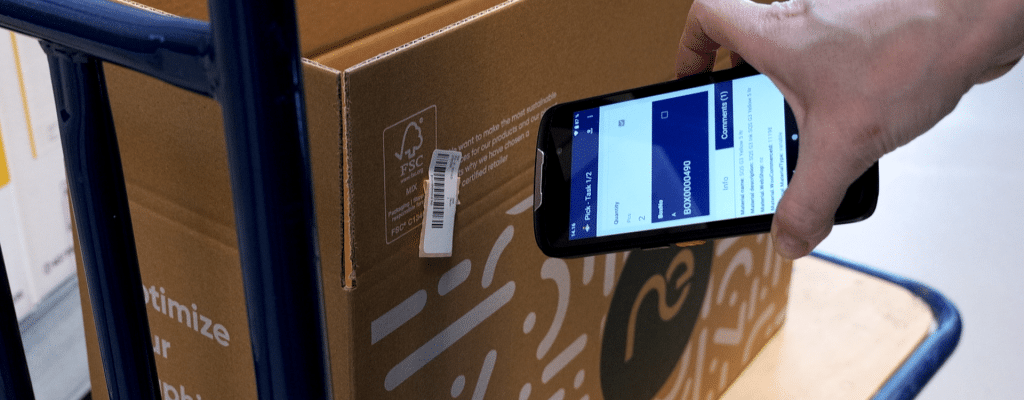
Implementing ERP and WMS in a growing warehouse requires thorough planning and understanding of the company’s specific needs. To ensure a successful implementation, companies should start by mapping their current processes and identifying areas that can be improved through automation and integration.
A phased approach can be advantageous, where companies start by integrating the most critical processes and gradually expand the integration to more areas. This ensures that employees can adapt to the new systems and processes at a pace that suits the company. Read more about WMS efficiency to gain insights into how this approach can be implemented.
Implementing ERP and WMS requires a careful approach, where companies should consider the long-term goals and the technological infrastructure needed to support these systems. For example, a medium-sized warehouse might begin by automating inventory replenishment and then expand to more complex processes such as shipping optimization. A phased approach ensures that each phase of implementation can be evaluated and adjusted as needed, minimizing the risk of errors and ensuring a smoother transition.
One of the most critical factors for a successful implementation is ensuring that employees are adequately trained in using the new systems. Companies should invest in comprehensive training programs and ongoing support to ensure that all employees can use ERP and WMS effectively.
Support and training can help minimize resistance to change and ensure that employees understand the benefits of the new systems. This can lead to a smoother transition and improved efficiency in daily operations.
Training and support should be a continuous process, updated in line with technological advances. Companies may consider offering interactive training modules that allow employees to learn at their own pace. This can be supplemented with regular follow-up sessions to ensure that employees feel confident using the new systems. Effective training can also include simulations of real-world scenarios, allowing employees to practice resolving issues with ERP and WMS in a risk-free environment.
Conclusion
ERP and WMS play a crucial role in handling partial orders and backorders in growing warehouses. By integrating these systems, companies can achieve better oversight, reduce errors, and improve efficiency. It is important to understand the challenges associated with partial orders and backorders and to implement strategies for effective management. Successful integration requires thorough planning, employee training, and ongoing support. By focusing on these areas, companies can improve their warehouse management and scale their operations effectively.
FAQ
How does ERP optimize inventory management?
ERP optimizes inventory management by synchronizing data across warehouse processes, providing accurate oversight and reducing errors.
What is the role of WMS in warehouse management?
WMS automates warehouse processes, saving time and resources for companies.
How does integration reduce warehouse errors?
Integration between ERP and WMS reduces warehouse errors by synchronizing data and eliminating the need for manual updates.
Why is real-time data important in warehouse management?
Real-time data is important as it allows warehouse managers to quickly adjust inventory and update order processes in response to demand changes.
How can supplier evaluation enhance flexibility?
Supplier evaluation can enhance flexibility by ensuring that supplier agreements are adaptable to meet changes in demand.
What does phased integration mean?
Phased integration means starting with the integration of the most critical processes and gradually expanding, ensuring a smooth transition.
How can companies predict demand trends?
Companies can predict demand trends by using advanced forecasting tools from ERP and WMS systems.
What is a well-developed strategy for handling backorders?
A well-developed strategy for handling backorders involves evaluating supplier performance and having flexible agreements for quicker replenishments.
Why is employee training important in ERP and WMS integration?
Employee training is important to ensure all employees can effectively use ERP and WMS, improving daily operational efficiency.
What is required for successful ERP and WMS implementation?
Successful implementation requires thorough planning, understanding of company needs, and a phased approach to integration.
Del indlæg:

Christian Mikkelsen
CCO, Apport Systems
Do you need help assessing whether a warehouse management system is right for your business? You are always welcome to contact me so that together we can find the best solution for your business.