
Don’t Forget Your Warehouse When Changing ERP
13/10/2026

Christian
CCO, Apport Systems
Why is ERP and WMS integration important?
ERP and WMS integration ensures that inventory management becomes a seamless part of the entire business operation process. To achieve effective integration, it is crucial to understand the difference between ERP and WMS and their respective roles. ERP systems often focus on financial and administrative tasks, while WMS specializes in the operational needs of the warehouse. Read more about the clear roles in inventory management in our article about ERP and WMS.
Did you know..
- ERP fokuserer på finansopgaver.
- WMS optimerer lageroperationer.
- Integration sikrer dataudveksling.
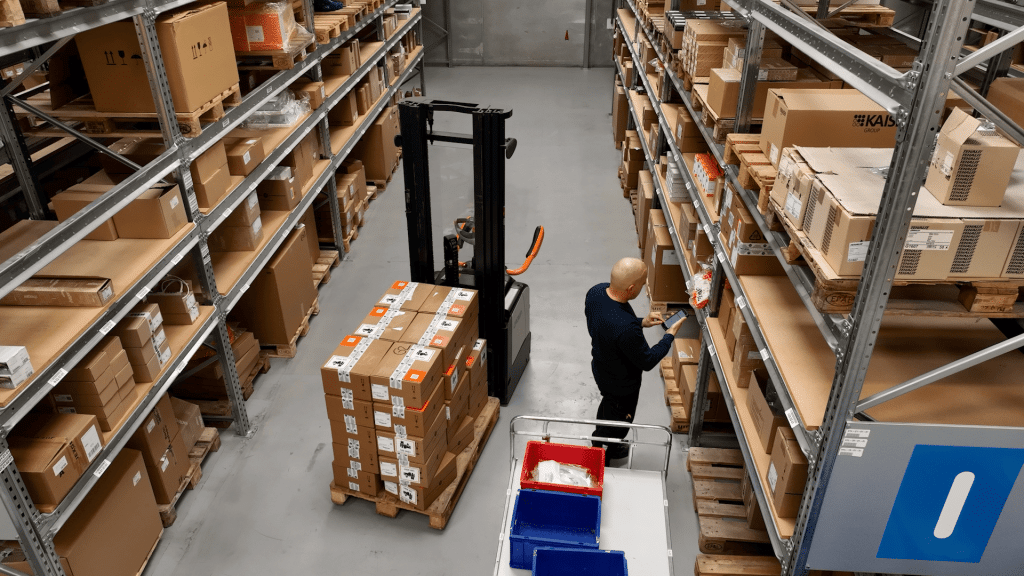
How does the warehouse affect an ERP switch?
Switching ERP systems can have significant consequences for inventory management. The warehouse is often one of the most complex parts of a business and therefore requires special attention. It is important to ensure that the new ERP system can communicate with the existing or a new WMS. The challenges of integration can be many, as we have described in our article on integration.
Benefits of combining ERP and WMS
By combining ERP and WMS, companies can achieve significant advantages, including improved inventory management, increased efficiency, and better customer service. A WMS can optimize warehouse operations such as picking, packing, and shipping, while ERP handles overall processes like billing and management reporting. This interplay can help strengthen the efficiency of inventory management, as described in our article on inventory management.
What should you consider when switching ERP?
When considering switching ERP systems, there are several things you need to take into account. First, you should evaluate whether the new ERP system can effectively integrate with your existing WMS. Second, ensure that the new system can scale with your company's growth. Finally, it is important to consider what support and training the provider offers to make the transition as smooth as possible.
Did you know..
- Cloud-løsninger giver skalerbarhed.
- Brugervenlighed kræver mindre træning.
- AI kan optimere lagerstyring.

How do you ensure a successful integration?
To ensure a successful integration between ERP and WMS, you must first and foremost choose systems that can "talk" to each other. This means they must be able to exchange data in real-time to maintain an accurate inventory overview. Using handheld scanners can also be an effective way to facilitate integration, as we describe in our guide to handheld scanner integration.
Key factors in selecting ERP and WMS
When choosing ERP and WMS systems, it is important to consider the flexibility and adaptability of the systems to your company's specific needs. Not all systems are created equal, and it can pay off to invest in a system that can grow with the company. Technological advances also mean that cloud-based solutions often provide an advantage in terms of scalability and access to updates.
Ease of use and training
A critical factor is also the user-friendliness of the systems. A complex system can hinder employee productivity if it requires extensive training. Therefore, you should ensure that there is adequate training and support offered by the provider. User-friendly interfaces can make it easier for employees to adapt to the new system, ensuring a smoother transition.
Data integrity and security
Data integrity and security are crucial when integrating ERP and WMS. The systems must ensure that data is transferred and stored securely and that there are robust procedures in place to protect against data loss or breaches. It is also important to have a plan for data backup and recovery in case of unexpected events.
Future trends in ERP and WMS
Technology is constantly evolving, and so are ERP and WMS solutions. Future trends point towards increased use of artificial intelligence and machine learning to optimize inventory management and predict needs. IoT devices can also be integrated to provide real-time insights into inventory and logistics processes.
Customer orientation and personalization
With increasing demands from customers, ERP and WMS systems are also expected to become more customer-oriented. This involves the ability to customize services and products to individual customer needs. For example, by using data to predict customer preferences and improve inventory management processes for faster delivery.
Conclusion
By remembering the warehouse when switching ERP, companies can ensure a more efficient and smooth transition. By understanding the importance of ERP and WMS integration, considering the impact on the warehouse, and the necessary considerations, decision-makers can make informed choices. This will not only improve inventory management but also support the company's overall growth and success. The future of technology is promising, and by staying updated on the latest trends, companies can continue to optimize their processes and meet customer expectations.
FAQ
Del indlæg:

Christian Mikkelsen
CCO, Apport Systems
Har du brug for hjælp til at vurdere hvorvidt et lagerstyringssystem er det rigtige for din virksomhed? Du er altid velkommen til at kontakte mig, så vi sammen kan finde frem til den bedste løsning for din virksomhed.